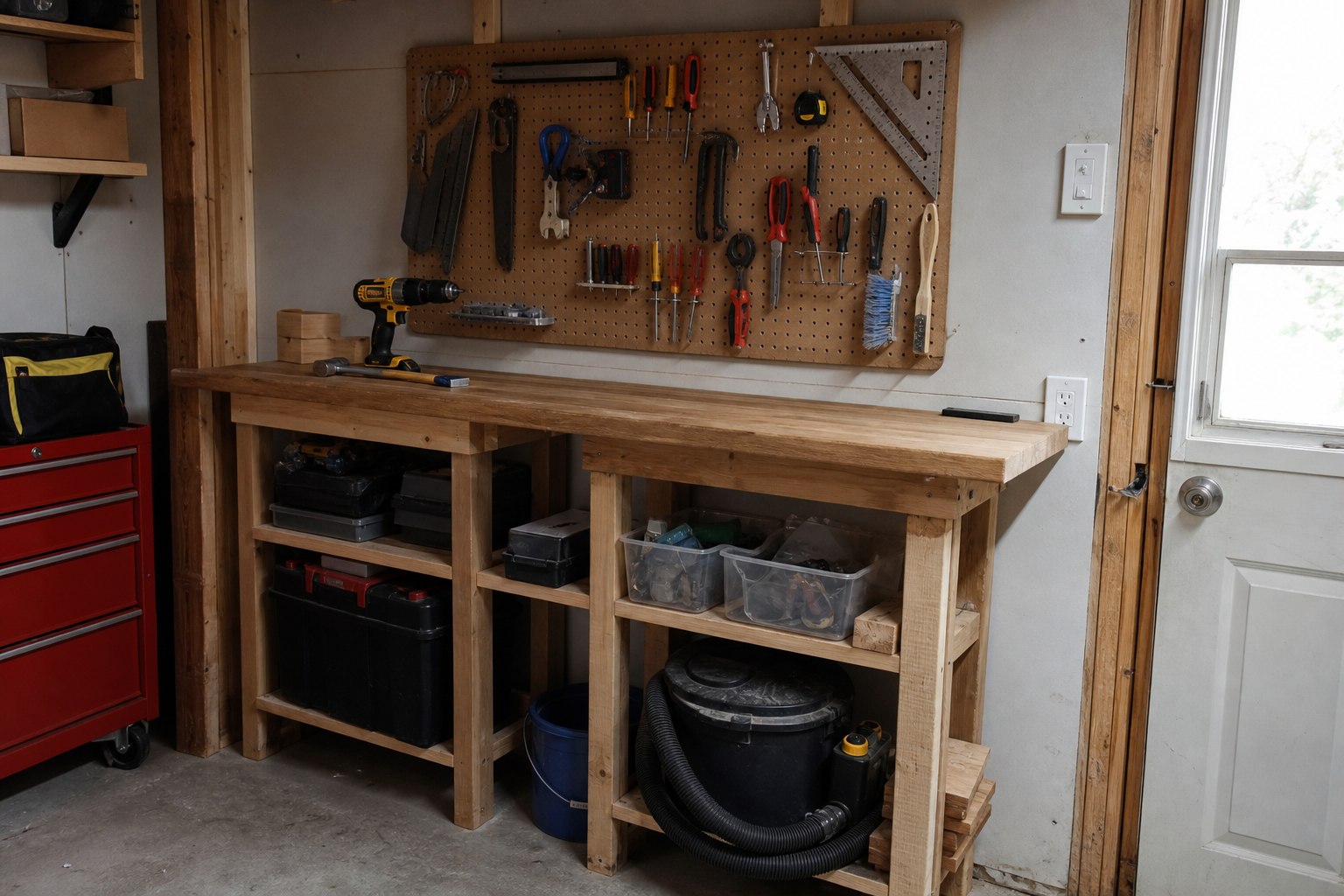
Small spaces can still hold a full workshop. These DIY Workbench Plans for Small Spaces turn limited room into a productive station. You build sturdy benches with storage, then add Workshop Organization Tips for Maximizing Efficiency. This guide shares hands-on ideas, personal tips, and free plans so you create a setup that fits any garage, basement, or corner.
I started with a tiny garage corner years ago. My first bench was just plywood on sawhorses. After a few projects, I learned how to make it better. Now I use compact benches that hold everything I need without crowding the space.
The key? Focus on size and smart design. A bench that fits under a shelf or along one wall saves floor space. It also gives you room to move around. You can make it in a weekend with basic tools and common materials.
Start by measuring your area. Look for spots near a power outlet or with good light. These small benches work great for handyman work, repair jobs, or hobby projects. You get the same tools you would in a big shop, just in a tighter fit.
Essential Tools for Every Handyman
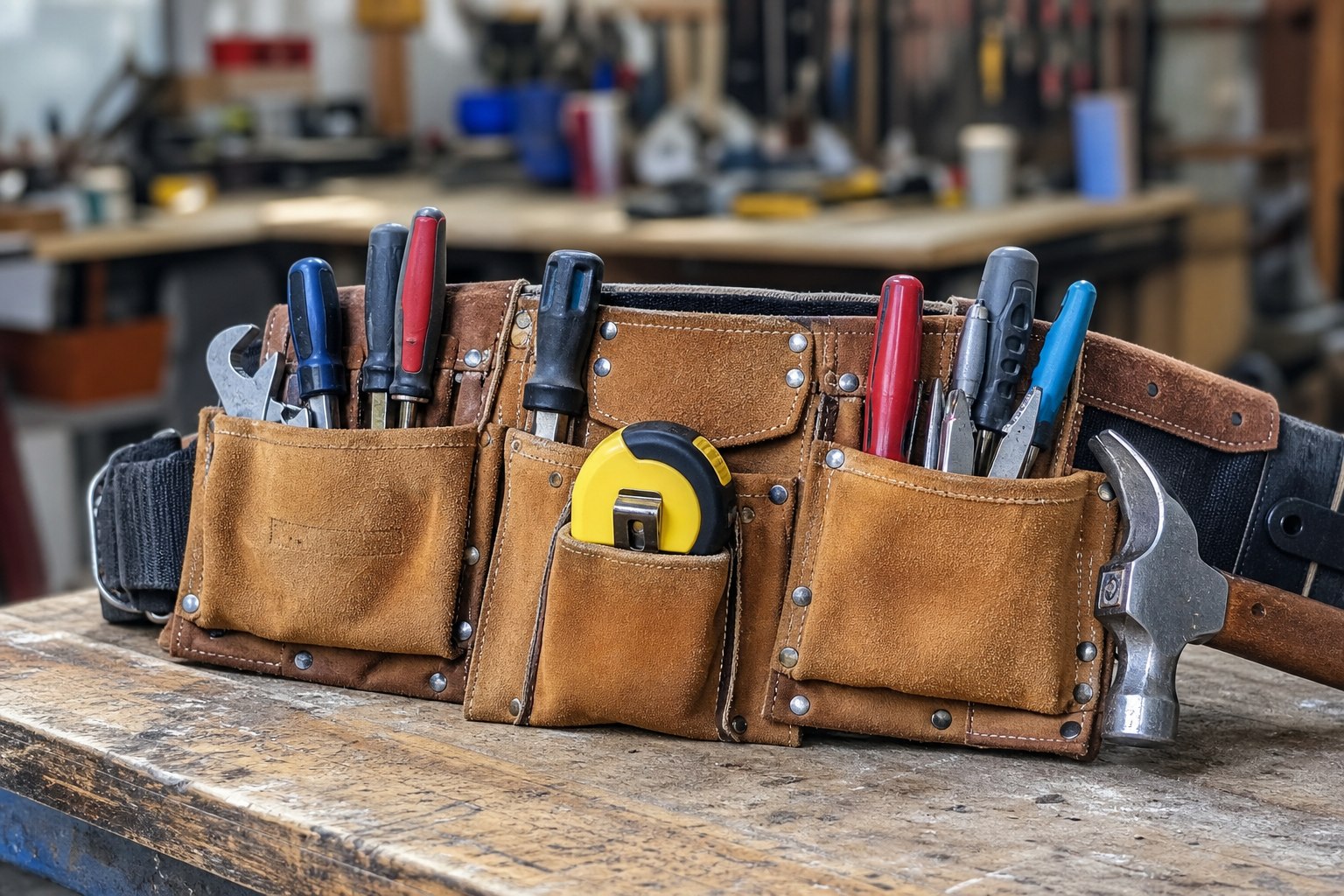
Before you build, gather a few key items. These workman tools make your bench more useful right away. You do not need expensive gear. A good hammer, tape measure, level, and clamp set cover most jobs.
List them here for clarity:
- Hammer for striking nails
- Tape measure for accurate cuts
- Level for straight work
- Clamp set for holding pieces together
- Pliers and screwdrivers for daily fixes
- Safety goggles and gloves for protection
These tools help you tackle projects safely and efficiently.
Many small-space users pair the bench with Workshop Organization Tips for Maximizing Efficiency. Wall-mounted racks, pegboards, and magnetic strips keep tools visible. You spend less time hunting and more time working. This setup feels calm and focused.
Key Design Features for Small Workbenches
When you follow these DIY Workbench Plans for Small Spaces, think about reach and storage first. The bench height should match your elbow height so you stay comfortable. A depth of 18 to 24 inches gives you space to work on both sides.
Add features like a lower shelf for heavy tools and cubbies for smaller items. These ideas come from real builds. They turn a flat surface into a full station without taking extra room.
Here is a simple table of recommended sizes for most small areas:
| Feature | Recommended Size |
|---|---|
| Length | 4 to 6 feet |
| Depth | 18 to 24 inches |
| Height | 30 to 36 inches |
| Weight Capacity | 300 to 500 pounds |
Use these numbers as a guide. Adjust for your height and projects.
Step-by-Step Build Guide
You can follow this simple plan for a mobile bench. It takes about four hours and costs under $100 in materials.
First, cut two 4-foot 2x4 legs and two 6-foot 2x4 rails. Join them with pocket-hole screws for strong corners. Add a 48-inch plywood top. Drill holes for casters so you can roll it around.
Next, build side panels for clamp storage. Cut 2-inch strips and screw them in place. Leave small gaps for easy access. Fill any leftover space with shelves for your essential tools for every handyman.
Finish with sandpaper and a coat of wood finish. Test the bench with a few practice pieces. You will find it stable and easy to move.
Workshop Organization Tips for Maximizing Efficiency
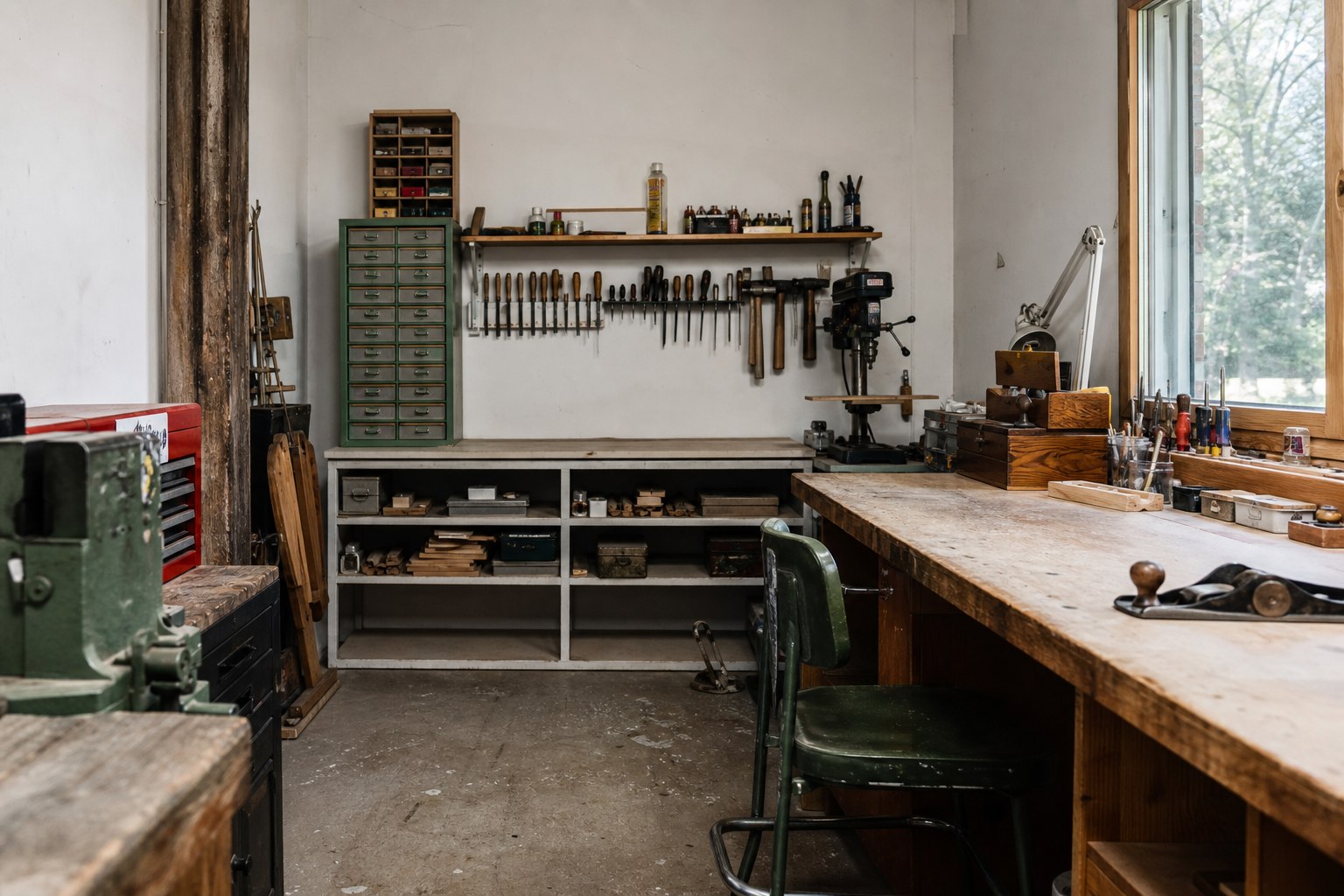
Once your bench is built, organize it like a pro. Use vertical space on the walls. French cleats hold heavy tools so they stay put. Label drawers and bins to find items fast.
Keep the bench surface clear. Place tools on a small rolling tray near your workbench. This setup follows simple rules: everything in its place, nothing on the floor. You finish jobs quicker and stay safe.
According to OSHA guidelines on ergonomics, good bench design helps prevent strain. Keep your elbows close to your body and work at a neutral wrist position. These habits make long sessions comfortable.
Another helpful resource comes from Penn State University research on woodworking bench ergonomics. It shows how bench shape affects your body and work quality. Apply these ideas to your small-space bench and you stay comfortable longer.
Workshop Organization Tips for Maximizing Efficiency (continued)
For small spaces, go vertical. Mount shelves high on the walls. Use bins to hold nails, screws, and other essentials. This frees floor space for your bench and keeps your area tidy.
A tip from the OSHA computer workstation guide applies here too: keep tools within easy reach. Measure your reach and place heavy items at waist height. You reduce bending and twisting, which lowers injury risk.
I have used this method in my own small shop. After one weekend of organization, I cut my search time in half. My bench feels more like an extension of my hands.
Troubleshooting Common Issues
Start with loose joints? Use stronger screws next time. Uneven surface? Sand the top flat before finishing. If the bench wobbles, add braces under the legs.
Test your new setup with a real project. Build a simple shelf or repair a tool box. You will see how the small bench handles daily work. Small problems turn into great learning moments.
Safety first. Wear gloves and goggles. Keep the area clear of clutter. These steps make your DIY Workbench Plans for Small Spaces safe and effective every time.
Final Thoughts
You now have everything you need to build a great compact workbench. Start with these DIY Workbench Plans for Small Spaces. Add your essential tools for every handyman and follow Workshop Organization Tips for Maximizing Efficiency. Your small space will become a true workshop you love to use.
The best part? You can customize it forever. Add new shelves or change the size as your needs grow. This hands-on approach saves money and gives you full control over your setup.
Related DIY Workbench Plans for Small Spaces:
- Essential Tools for Every Handyman: Building Your Toolkit
- Digital Detox: How to Reduce Screen Time and Improve Focus
- Must-Have Hand Tools for Mechanics: The Essential Workman Tools That Get the Job Done Right
- Tool Belts with Ergonomic Designs: Boost Comfort, Efficiency, and Safety for Every Workman
- Best Ratcheting Wrenches for Fast Repairs Guide
- Understanding OSHA Standards for Scaffolding Safety
- How to Choose the Best Toolbox for Your Needs
- Must-Have Workman Tools for Every Toolbox: Your Complete Guide to Essential Construction Gear
- Next-Level Gear for Pro Mechanics: Must-Have Hand Tools for Mechanics & Workman Tools in 2026
- The Ultimate Guide to Tool Maintenance: Keep Your Workman Tools in Top Shape for Years of Reliable Use
- Understanding the Latest Trends in Workman Tools: Smart, Sustainable Picks for Efficiency
- Rotary Tool Accessories and Attachments: The Ultimate Guide for Beginners and Pros