An organized workbench is essential for anyone who wants to work efficiently and effectively. Whether you're a professional tradesperson or a DIY enthusiast, having a well-organized workspace can save you time, reduce frustration, and improve the quality of your work. In this article, we'll explore the importance of organizing your workbench for maximum efficiency and provide practical tips and strategies for achieving an organized and productive workspace.
Before you can organize your workbench, you need to assess your current setup. This involves taking a close look at your workspace and identifying areas that need improvement.
Start by taking inventory of your tools and materials. Make a list of everything you have, including hand tools, power tools, hardware, and any other supplies you use regularly. This will help you understand what you have and what you need to organize.
Next, observe how you use your workbench. Pay attention to the tasks you perform most frequently and the tools you use most often. This will help you determine which items should be easily accessible and which can be stored away.
Look for problem areas in your current setup. Are there tools that are constantly getting in the way? Do you have to search through piles of clutter to find what you need? Identifying these issues will help you prioritize your organization efforts.
Once you've assessed your current setup, it's time to plan your workbench organization. This involves creating a layout that maximizes efficiency and ensures that everything has a designated place.
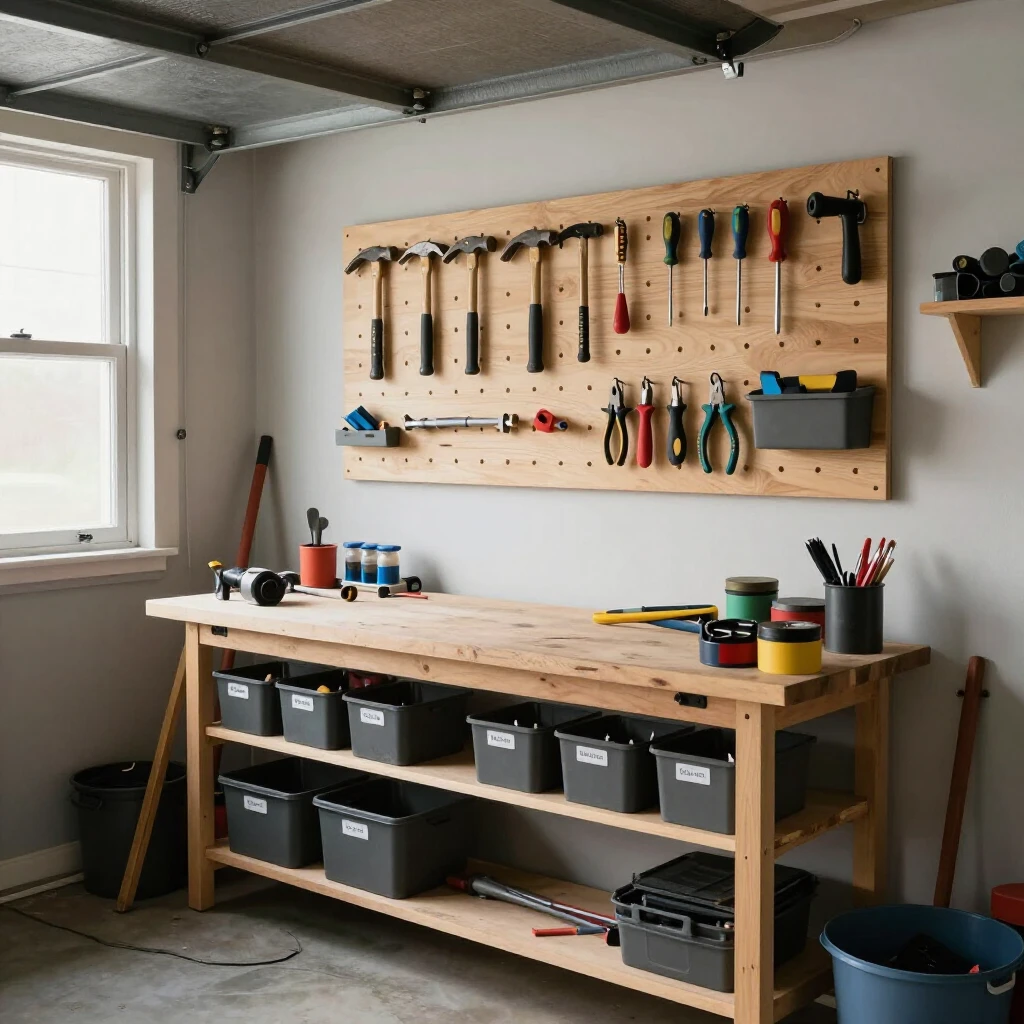
Start by sketching a rough layout of your workbench. Consider the size and shape of your workspace, as well as any existing storage solutions you have. Think about how you can optimize the use of vertical space. Installing shelves, pegboards, or wall-mounted organizers can help you make the most of your available space.
Decide on storage solutions that suit your needs. For example, drawers are great for small tools and hardware, while larger items like power tools might be better stored on shelves or in cabinets.
- Storage Solution Outline:
| Storage Solution | Pros | Cons |
|------------------|------|------|
| Pegboard | Easy to install, versatile, visible storage | Limited weight capacity, can look cluttered |
| Drawers | Concealed storage, good for small items | Can be expensive, may require more space |
| Shelves | Inexpensive, good for large items | Can collect dust, may not be suitable for small items |
Prioritize frequently used tools. These should be placed within easy reach, while less frequently used items can be stored in less accessible areas. For example, keep your most-used workman tools, such as hammers, screwdrivers, and pliers, in a prominent location.
With your plan in place, it's time to start implementing organization strategies. This might involve installing new storage solutions, labeling tools and materials, and creating designated areas for different types of work.
If you're installing shelves or pegboards, make sure they are securely mounted and can support the weight of your tools. Labeling is an important part of organization. Use clear, descriptive labels for drawers, bins, and shelves to make it easy to find what you need.
Consider creating designated areas for different types of work. For example, you might have a section of your workbench dedicated to woodworking, another for metalworking, and so on. This can help you stay focused and efficient.
Organizing your workbench is not a one-time task; it requires ongoing maintenance. To keep your workspace organized, make a habit of putting tools back in their designated spots after each use. This simple practice can prevent clutter from building up.
Regularly clean your workbench to maintain a tidy environment. This might involve sweeping away sawdust, wiping down surfaces, and disposing of any trash or unnecessary items. Periodically reassess your organization system. As your needs change or you acquire new tools, you might need to adjust your layout or add new storage solutions. Stay flexible and be willing to adapt your organization strategies to ensure your workbench continues to serve you well.
I remember when my workbench was a chaotic mess. Tools were scattered everywhere, and I wasted precious time searching for what I needed. It was frustrating and inefficient. But after taking the time to organize my workspace, I noticed a significant improvement in my productivity. Now, I can find tools quickly, and my workbench is a pleasure to use. The key was creating a system that worked for me and sticking to it.
If you're struggling with a disorganized workbench, don't worry—you're not alone. Many people face this challenge, but with a little effort and the right strategies, you can transform your workspace into a model of efficiency.
Organizing your workbench for maximum efficiency is a worthwhile investment of time and effort. By assessing your current setup, planning your organization, implementing effective strategies, and maintaining your workspace, you can create a workbench that enhances your productivity and makes your work more enjoyable. Remember, the key to a well-organized workbench is finding a system that works for you and sticking to it.
Related organizing your workbench for maximum efficiency:
- DIY Storage Solutions for Small Workspaces: Boost Efficiency in Tight Areas
- Essential Safety Tips for DIY Electrical Work
- Essential Maintenance Tips for Outdoor Equipment
- How Ergonomic Tools Save Your Hands
- Top-Quality Workman Tools for Contractors
- How to Organize a Small Workshop for Maximum Efficiency
- Advanced Tool Maintenance Tips
- The Ultimate Guide to Plumbing Tools
- Essential Power Washer Accessories for Better Cleaning
- Essential Automotive Tools Every DIY Mechanic Needs
- Managing a Clean and Efficient Workshop
- Safety First: Best Practices for Electrical Work