A Quick Overview
In the world of woodworking, few tools shape your success like chisels. These workman tools carve out details, fit joints, and refine edges with precision. This guide covers the essential chisels in a woodworker's toolkit, sharing types, tips, and stories from the bench to help you build better.

Why Chisels Deserve a Spot in Your Toolkit
I remember my first chisel—a simple 1/2-inch bench model my grandfather handed down. It wasn't fancy, but it taught me patience and control. Chisels stand out among workman tools because they demand your full attention. One wrong angle, and you chip the wood. Done right, they reveal the beauty hidden inside a rough board.
Over years in the shop, I've learned chisels aren't just cutters; they're extensions of your hands. They help with everything from dovetails to smoothing curves. Without quality chisels, even the best plans fall flat.
Think about your projects. Whether you're crafting a chair or a shelf, chisels handle the fine work power tools can't touch. They fit into tight spaces and leave clean lines. In my experience, starting with the right set saves hours of frustration.
The Core Types of Chisels You Need
Not all chisels serve the same purpose. Let's break down the essentials. I'll focus on those that earn their keep in most toolkits.
Bench Chisels: Your Everyday Heroes
Bench chisels form the backbone of any woodworker's collection. These versatile tools handle paring, chopping, and scraping. Their beveled edges slide into joints easily.
I reach for my bench set daily. They're perfect for cleaning up mortises or trimming tenons. According to the Oregon State University Extension's woodworking tools guide, bench chisels come in widths from 1/8 to 2 inches, but start with common sizes for broad use.
Mortise Chisels: Built for Tough Jobs
When you need to cut deep, square holes for joints, mortise chisels shine. Thicker and stronger than bench types, they withstand mallet blows without bending.
In one project, I used a 1/4-inch mortise chisel to square a hinge pocket in oak. It held up where a thinner tool would have flexed. The Red Rocks Community College furniture woodworking tool list suggests starting with 1/4-inch and 1/2-inch sizes for balanced coverage.
Paring Chisels: For Delicate Touches
Paring chisels are long and thin, ideal for shaving thin slices or fitting parts by hand. No mallet needed—just steady pressure.
These saved a heirloom box I was repairing. The blade glided through end grain without tear-out. They're less common but invaluable for detail work.
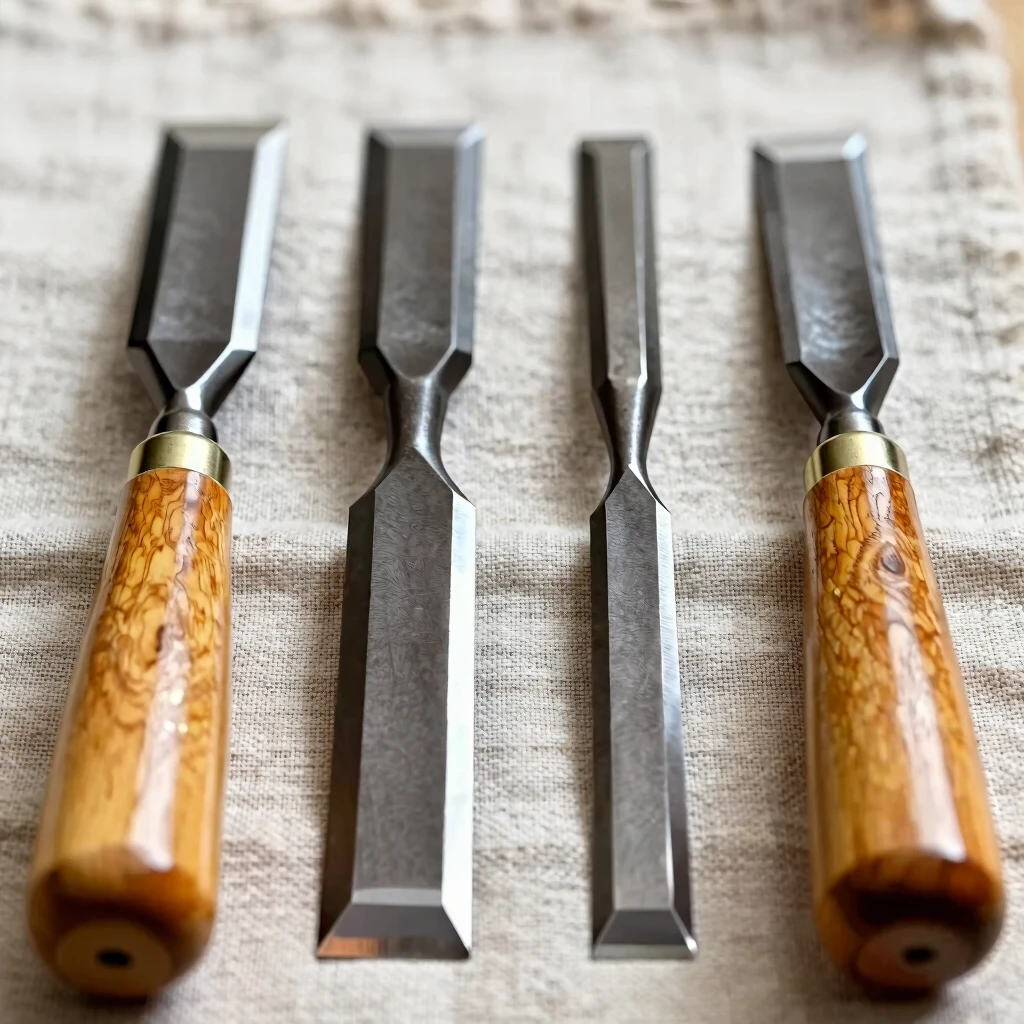
Here's a quick table of recommended sizes for each type:
| Type | Essential Sizes (inches) | Best For |
|---|---|---|
| Bench Chisel | 1/4, 3/8, 1/2, 3/4 | General cutting and fitting |
| Mortise Chisel | 1/4, 1/2 | Deep joint work |
| Paring Chisel | 1/4, 1/2 | Fine shaving and trimming |
This setup covers 90% of tasks, based on my shop time.
Choosing Quality Chisels That Last
Picking chisels feels overwhelming at first. Sizes, brands, steel types—where do you start? The Northwest School of Wooden Boatbuilding's student tool guide recommends a bench set in 1/4 to 1 inch for beginners, praising brands like Two Cherries for their edge-holding power.
I swear by high-carbon steel. It sharpens easily and stays keen longer. Avoid cheap sets; they dull fast and can snap. Spend $40-60 per chisel for tools that grow with you.
Consider your hands too. Ergonomic handles reduce fatigue. In my early days, a slick handle slipped during a chop—lesson learned. Test the balance; it should feel like an extension of your arm.
For carving touches, the SUNY Delhi woodcarving tool list highlights gouges and skews alongside basics. Add one or two as you advance.
Budget tip: Buy a starter set of six bench chisels. It runs $200-300 but pays off in clean work and fewer replacements.
Mastering Safe and Effective Use
Chisels reward skill but punish carelessness. Always push away from your body. Secure your workpiece in a vise—no freehand holding.
From the OSU guide, cut with the grain to prevent splintering. For crosscuts, guide the blade with your fingers behind the edge. I add a leather tip guard for storage—simple but effective.
- Prep your space: Clamp wood firmly.
- Stance matters: Feet shoulder-width, non-dominant hand guides.
- Light touch first: Pare before chopping.
- Eye protection: Chips fly fast.
These habits turned my shaky starts into confident strokes.
In a recent dovetail class, a student nicked his thumb ignoring the grain. We fixed it quick, but it underscored: sharp tools plus respect equals safety.

Keeping Your Chisels Razor-Sharp
A dull chisel is worse than none—it tears wood and risks slips. Maintenance takes minutes but extends tool life.
Hone weekly with a 1000-grit stone, then strop on leather. I do this ritual like coffee: starts the day right. The NWSWB guide notes quality steel like Two Cherries needs less fuss but still rewards care.
Steps I follow: 1. Flatten the back on 400-grit sandpaper. 2. Grind the bevel at 25 degrees. 3. Hone to a burr, then remove it. 4. Strop for polish.
Flatten your stones too, or they wear uneven. Over time, this ritual built my favorite chisel's edge to shave arm hair—true test passed.
Store upright in a rack. Oil lightly to fend off rust. Neglect this, and you'll fight corrosion like I did after a humid summer.
Wrapping It Up: Build Your Chisel Legacy
Essential chisels in a woodworker's toolkit aren't luxuries—they're foundations. From bench workhorses to mortise bruisers, the right set empowers clean, lasting creations. Invest wisely, use safely, and sharpen often. Your projects will thank you, and so will your hands.
Next time you plane a board, grab a chisel. That satisfying slice? It's woodworking magic.
Related essential chisels in a woodworker's toolkit:
- Exploring Power Tools vs. Hand Tools: The Ultimate Guide for Woodworkers
- Beginner's Guide to Sharpening Woodworking Tools
- Understanding Power Drill Attachments and Their Uses
- How to Organize Your Workshop Like a Pro
- Maintenance Tips for Workman Tools: Keep Your Gear Sharp and Safe
- Essential Electrical Tools for Troubleshooting and Repair: A Hands-On Guide
- Essential Safety Tips for Metalworking Beginners: Protect Yourself and Craft with Confidence
- Understanding Your Car’s Cooling System: Tips and Tricks
- How to Maintain Your Hammers for Longevity
- Essential Workman Tools for Electrical Work: A Hands-On Guide to Getting the Job Done Right
- Top Voltage Testers for Safe Electrical Work
- How AI is Transforming Manufacturing: The Future of Industrial Automation