How to Use Wrenches Safely: A Complete Guide
Wrenches are everyday workman tools that seem simple, yet thousands of people hurt themselves with them each year. This guide shows you how to use wrenches safely so you finish jobs without scraped knuckles, strained muscles, or worse. (38 words)
You probably reach for a wrench whenever something needs tightening or loosening. I’ve spent years fixing cars, bikes, and furniture, and I’ve learned that a few smart habits make all the difference between a smooth job and a trip to the emergency room.
Know Your Wrenches: Common Types and When to Use Them
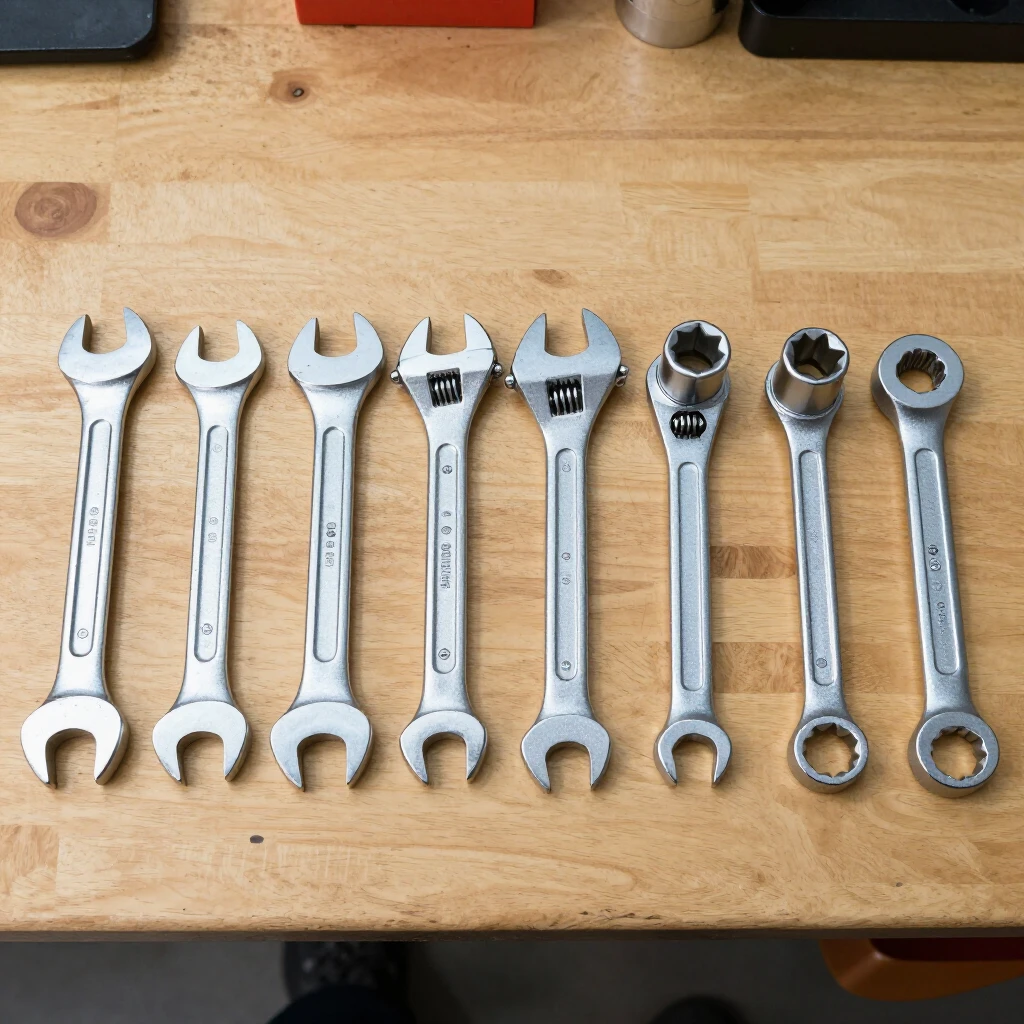
Different jobs need different wrenches. Using the wrong one invites slippage and injury.
| Type | Best For | Safety Note |
|---|---|---|
| Open-End | Quick access in tight spots | Grips only two sides – easy to slip |
| Box-End | High torque jobs | Surrounds nut fully – much safer |
| Combination | Most general work | One open end, one box – very versatile |
| Adjustable | Odd sizes | Adjust snugly; pull so fixed jaw takes force |
| Socket with Ratchet | Fast repetitive work | Use impact-rated sockets if needed |
| Pipe Wrench | Round pipes only | Never use on bolts – jaws can damage flats |
Choose the Right Size and Condition Every Time
A wrench that doesn’t fit perfectly will slip. That sudden slip is how most wrench injuries happen – smashed fingers, busted knuckles, or even falls.
- Always select a wrench that fits snugly with no play.
- Never use shims or force a wrong-size wrench.
- Inspect before use: throw away any wrench with spread, cracked, or rounded jaws.
- Keep wrenches clean and dry. Oil or grease turns a safe tool into a dangerous one.
I once watched a friend try to loosen a stubborn bolt with a slightly loose adjustable wrench. The wrench slipped, and he punched the sharp edge of the engine block. Eight stitches later, he started checking fit every single time.
The Golden Rule: Pull, Don’t Push
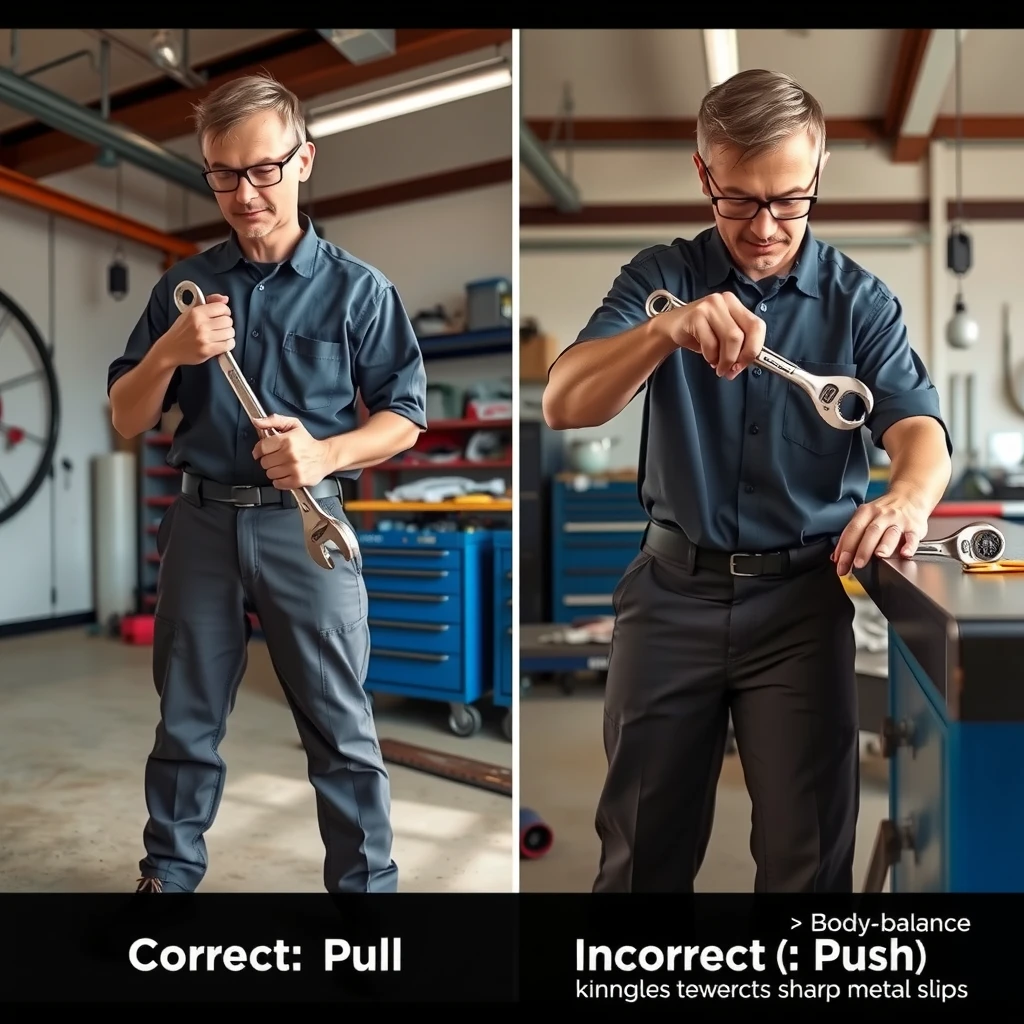
Always position yourself so you pull the wrench toward you. Pulling gives you control and balance.
- If you must push, use the palm of your hand on the handle end so your knuckles stay clear.
- Stand with feet shoulder-width apart and knees slightly bent.
- Brace yourself for the moment the fastener breaks loose.
Proper Grip and Body Position
Hold the wrench near the end of the handle for maximum leverage, but keep your hand clear of the jaw area.
- For adjustable wrenches, turn the knob until the jaws grip firmly, then position the wrench so the fixed jaw (not the movable one) takes the force.
- With box-end or socket wrenches, make sure the tool is fully seated on the fastener.
- Work at a comfortable height so you don’t have to reach awkwardly.
Good posture prevents back and shoulder strain that builds up over years of DIY work.
Common Mistakes That Cause Injuries (And How to Avoid Them)
Here are the errors I see most often:
- Using a cheater pipe to extend the handle → creates dangerous leverage and can break the wrench.
- Hammering on a standard wrench → only striking-face wrenches are designed for that.
- Using pipe wrenches on hex nuts → rounded corners and slippage follow.
- Working overhead without eye protection → falling debris or a slipping wrench can blind you.
According to OSHA guidelines for hand tools, slipped wrenches cause many preventable injuries each year. A few seconds of setup saves hours of pain. OSHA Hand and Power Tools Overview
Wear the Right Protection
Personal protective equipment turns serious accidents into minor annoyances.
- Safety glasses or face shield – always.
- Cut-resistant gloves that still allow good grip.
- Steel-toe boots if working in a shop.
- Long sleeves to protect forearms from sharp edges.

Maintenance Keeps Wrenches Safe
Treat your wrenches well and they’ll treat you well.
- Wipe them clean after every use.
- Store in a dry toolbox to prevent rust.
- Lightly oil chrome wrenches occasionally.
- Check torque wrenches yearly for calibration.
A clean, well-maintained wrench is far less likely to slip than a greasy, worn one.
Real-Life Lessons From the Shop
Early in my garage days, I ignored a slightly spread open-end wrench. It slipped off a brake bolt, and I gashed my hand badly enough to need stitches. That one mistake taught me to inspect every tool before use – a habit that has saved me countless times since.
Another time, I watched a coworker push hard on a wrench while standing on a ladder. When the bolt gave way, he lost balance and fell. Fortunately he wasn’t seriously hurt, but it drove home the importance of pulling and maintaining stable footing.
Quick Safety Checklist Before You Start
Run through this mental list every time:
- Right type and size?
- Tool in good condition?
- Clean and dry?
- Wearing eye protection?
- Positioned to pull?
- Stable footing?
Final Thoughts
Wrenches are simple, reliable workman tools when you respect them. Choose the correct one, keep it clean and in good shape, pull instead of push, and always wear eye protection. Follow these habits and you’ll complete projects safely and efficiently for years to come.
Stay safe out there – your hands will thank you.
Related how to use wrenches safely:
- How to Choose the Right Power Washer for Your Needs
- Organizing Your Workshop: Tips for Efficient Tool Storage
- DIY Painting Hacks for Beginners: Simple Tips for Professional Results
- The Ultimate Guide to Tool Belts with Built-In Storage in 2026
- Best Beginner Power Tools Reviews - Wood Magazine
- Beginner's Guide to Lawn Mower Upkeep
- How to Choose the Right Oil for Your Car
- Innovative Construction Tools for Efficiency: Boosting Productivity on the Job Site
- How to Sharpen Your Tools Like a Pro
- Best Tool Belts for Different Trades: The Ultimate Guide to Choosing the Right Tool Belt for You
- How to Use Electrical Tools Safely
- Maintenance Tips for Keeping Your Tools in Top Condition: A Practical Guide