Working with electricity is rewarding, but it can be dangerous if you’re not careful. This guide gives beginner electricians practical, essential safety tips to protect yourself while building skills and confidence. You’ll also find a comprehensive guide to workman tools for beginners, covering the electrical tools you need for safe troubleshooting and repair.
Why Safety Matters More Than Speed
I’ve been around electricity long enough to know that one small oversight can change everything. Shocks, burns, and fires happen fast. Good safety habits don’t slow you down—they let you work faster and better because you’re not worried about getting hurt. Start with safety, and everything else follows.
Personal Protective Equipment (PPE) – Your First Line of Defense
Never touch electrical work without proper gear. Here’s what you actually need:
- Safety glasses – Protect your eyes from sparks and debris.
- Insulated rubber gloves – Rated for the voltage you’re working with (Class 00 for household, higher classes for bigger jobs).
- Flame-resistant clothing – No synthetic shirts that can melt.
- Steel-toe or composite-toe boots – With rubber soles for extra insulation.
- Hard hat – If you’re working overhead or in a construction setting.
Check your gear before every job. A small crack in a glove can ruin your day.

Basic Safety Rules Every Beginner Must Follow
- Turn off the power at the breaker or main disconnect.
- Lock out and tag out the breaker so no one accidentally turns it back on.
- Test for voltage with a reliable tester before touching anything.
- Treat every wire as live until you prove otherwise.
- Use only one hand when working on live circuits (if you absolutely must).
- Keep your work area dry – water and electricity don’t mix.
- Stand on a rubber mat or dry wood when working on live panels.
These rules aren’t suggestions. They’re the difference between going home safe and not going home at all.
Essential Electrical Tools – A Comprehensive Guide to Workman Tools for Beginners
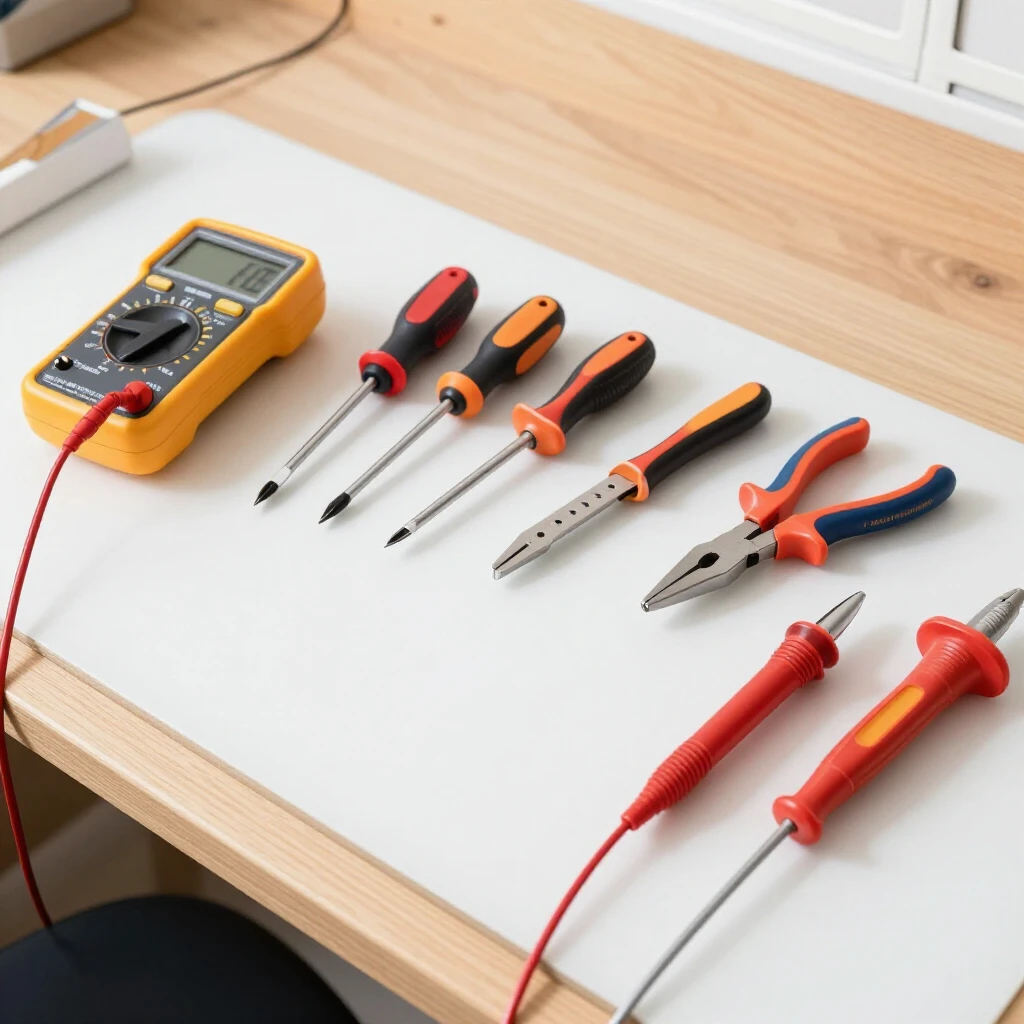
Having the right electrical tools makes work safer and easier. Here are the must-have items for beginners doing troubleshooting and repair:
| Tool | Main Use | Safety Note |
|---|---|---|
| Digital Multimeter | Measure voltage, current, resistance | Choose one with CAT III or CAT IV rating |
| Non-Contact Voltage Tester | Quick check if wires are live | Test on a known live circuit first |
| Insulated Screwdrivers | Turn screws in panels and devices | 1000V rating, check for damage |
| Needle-Nose Pliers | Bend and cut small wires | Insulated handles only |
| Wire Strippers | Remove insulation without nicking wire | Automatic strippers reduce hand strain |
| Linesman Pliers | Heavy cutting and twisting | Insulated, strong jaws |
| Electrical Tape | Insulate splices and mark wires | Use quality UL-listed tape |
| Flashlight or Headlamp | See inside dark panels | LED, hands-free preferred |
Invest in quality tools. Cheap ones fail when you need them most.

Safe Troubleshooting and Repair Practices
When something isn’t working, follow this sequence every time:
- Identify the problem from symptoms.
- Turn off power at the breaker.
- Lock and tag the breaker.
- Verify zero voltage with your tester.
- Open the panel or device carefully.
- Inspect connections and components visually.
- Use your multimeter to test continuity and voltage (with power back on only when necessary and safe).
- Make repairs with properly rated parts.
- Re-test the circuit before restoring full power.
Never bypass safety steps to save time. That’s how accidents happen.

Common Beginner Mistakes (and How to Avoid Them)
- Working live when it isn’t necessary – Almost everything can be done with power off.
- Trusting someone else who says “it’s off” – Always test yourself.
- Using damaged tools or cords – Inspect everything before use.
- Overloading circuits – Know the load limits.
- Skipping grounding checks – Always verify proper grounding.
Learn from others’ mistakes instead of your own.
Final Thoughts
Safety isn’t about fear—it’s about respect for a powerful force. Follow these essential safety tips for beginner electricians every single time you work. Wear your PPE, use the right electrical tools, and never take shortcuts. Build safe habits now, and they’ll protect you for your entire career.
Stay curious, keep learning, and always put safety first.
Related Essential Safety Tips for Beginner Electricians:
- Electric vs. Gas Power Washers: Which Is Right for You?
- The Best Power Tools for DIY Beginners
- Top Safety Tips for Using Power Tools
- How Automation is Changing the Manufacturing Industry
- How to Maintain Your Workman Tools for Longevity
- Easy Ways to Keep Your Toolbox Organized: Practical Tips for Every DIY Enthusiast
- 10 Essential Tools for Jewelry Making
- Best Wrenches for Every Job: The Ultimate Guide
- How to Choose the Right Electrical Tools for Your Projects
- How to Sharpen Your Hand Tools Like a Pro
- Must-Have Wrenches for Every Toolbox: The Essential Guide for 2026
- How to Maintain Your Tools for Longevity: Practical Tips for Lasting Performance